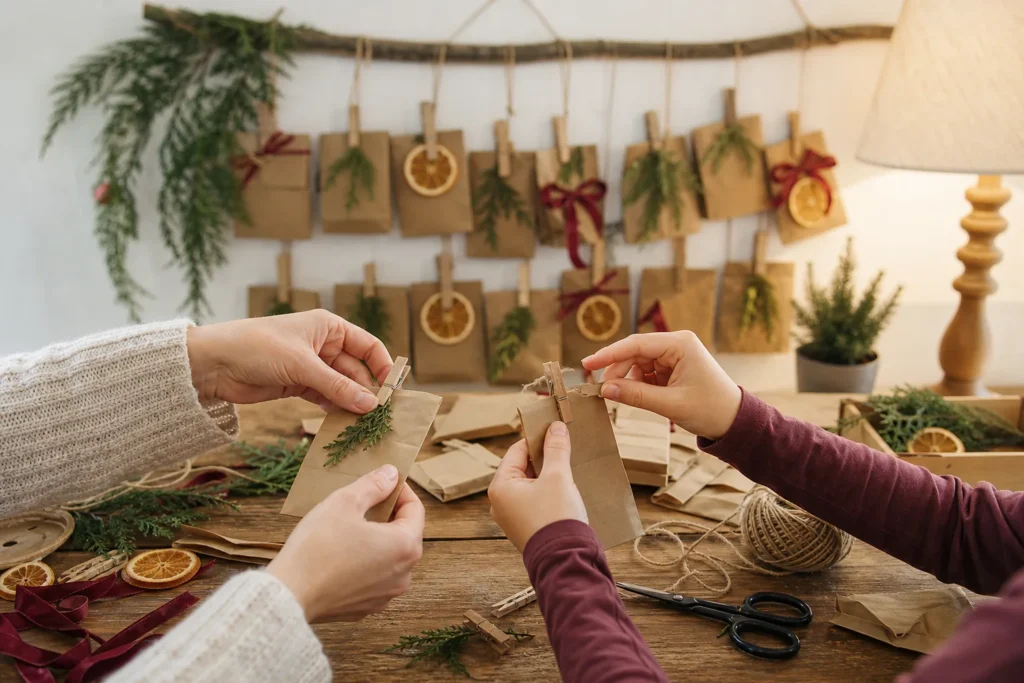
Make an Advent calendar around an action your household can repeat: open a picture, read a note, add a piece or choose a small activity. These fifteen reusable ideas range from paper envelopes to fabric pockets, with preparation guidance rather than a deadline to start in August.
Content reviewed September 10, 2026. Countdown values are calculated separately from this editorial date.
Before choosing a design, choose the daily action
An Advent calendar can reveal a picture, hold a sweet, assign an activity or move a marker. Decide which action the household can repeat for twenty-four days. The container comes second.
For 2026, December 1 falls on Tuesday. The four Sundays of Advent are November 29, December 6, December 13 and December 20. A calendar numbered December 1 through 24 is a popular countdown, but it is not identical to the church season. Families may use either structure as long as they label it clearly.
Materials that are safe and reusable
Start with what will go inside. A wrapped chocolate needs food-safe separation. A written activity only needs a paper pocket. A small toy may require a deeper box and a warning for children under three.
Useful materials include kraft envelopes, small cloth bags, matchbox-style craft boxes, paper cups, cardboard tubes, wood pegs, cotton cord and a rigid backing board. Avoid loose magnets, button batteries, sharp staples and long accessible cords around small children. Keep the finished calendar away from candles, heaters and cooking surfaces.
If more than one child will use the calendar, decide whether each day contains one shared item or one item per child. Solve that before sealing twenty-four containers.
Idea 1: kraft envelopes on a board
Number twenty-four envelopes and attach them to a corkboard or sturdy card with removable clips. Use different envelope sizes for visual variety, but keep the contents light. This design is easy to refill and stores flat.
Idea 2: a clothespin line
Hang numbered cards or small bags from a line with wooden pegs. Anchor the line securely and place it above the reach of toddlers and pets. This works well for activity slips and family photographs.
Idea 3: a library of tiny books
Fold twenty-four miniature paper books. Each can contain a joke, memory, prompt or one paragraph of a continuing story. Arrange them upright in a small box. Older children can write several entries themselves before December.
Idea 4: reusable fabric pockets
Sew or fabric-glue pockets to a backing, allowing proper curing time and following the adhesive instructions. Reinforce the hanging points because twenty-four filled pockets become heavy. Use large embroidered or printed numbers with strong contrast.
Idea 5: cardboard houses
Make a row of simple house-shaped boxes from card. Vary roof color rather than adding hard-to-store details. Leave the bases open or create doors that can close again. The village can become a table display, provided it stays away from flames.
Idea 6: paper cups in a tree shape
Attach twenty-four paper cups to a rigid board and cover the openings with tissue paper. This version gives a satisfying reveal but is less reusable. Use lightweight contents and mount the board securely.
Idea 7: numbered ornaments
Place twenty-four lightweight ornaments in a divided box and add one to a small tree each day. The calendar gradually decorates itself. This is a good choice for households avoiding daily sweets or gifts.
Idea 8: photo memories
Print twenty-four family photographs and write a short memory on the back. Display one each day on a stand or string. Ask permission before including photographs of people outside the household, especially children.
Idea 9: acts of care
Fill envelopes with small practical actions: send a message to a relative, donate a pantry item, pick up litter on a walk, thank a teacher or help prepare dinner. Keep each action realistic for a weekday. Charity should not be used as a performance for social media.
Idea 10: a puzzle built over twenty-four days
Divide a suitable puzzle into twenty-four small bags. Add one group of pieces each day. Test the division so early days contain enough connected pieces to be enjoyable. Keep tiny pieces away from young children.
Idea 11: a building-block scene
Sort pieces for a winter model into daily packets with a simple photo or instruction. Use pieces already owned when possible. The final scene should be achievable even if a day is missed.
Idea 12: spice and tea calendar
Adults may enjoy labeled tea bags, coffee samples or sealed spice portions. Check allergies, caffeine needs and food storage. Do not place loose food directly into painted or non-food-safe craft containers.
Idea 13: map the journey
Draw a path of twenty-four spaces toward a stable, home or chosen celebration point. Move one figure each day. This uses one object instead of twenty-four containers and works well in small spaces.
Idea 14: one poem or carol a day
Choose twenty-four short texts and place the titles in envelopes. Read or sing one each evening. Check copyright before reproducing modern texts publicly. Traditional works may be in the public domain, but a recent arrangement or translation can still be protected.
Idea 15: the family recipe calendar
Use recipe cards to reveal dishes, family stories and a few actual cooking days. Most entries can simply be memories or plans. Nobody needs to bake twenty-four times. End with the Christmas morning or Christmas Eve recipe the household values most.
A weekend build schedule
- Friday evening: Choose the daily action, measure the display area and make the contents list.
- Saturday morning: Cut and assemble all repeated pieces in batches.
- Saturday afternoon: Add numbers and test the hanging or standing system.
- Sunday morning: Fill containers, keeping food and small objects safe.
- Sunday afternoon: Photograph the order, store it flat and label repair materials.
How to keep it from becoming December homework
Do not fill every day with an outing. Use mostly tiny actions and leave high-effort plans for dates already reserved. Include several “choose a song,” “read together” and “free evening” slips. A calendar should reduce decision fatigue, not generate twenty-four deadlines.
If the family misses a day, open it later without apology. The object serves the household. The household does not owe perfect attendance to the object.
Storage and next-year notes
Take one photograph before dismantling. Remove food, batteries and anything that can leak. Store number pieces together and write down what failed. If pocket 17 sagged or the string was too short, next August’s repair will take minutes.
Advent calendar questions
When should I start making one?
August is comfortable for sewing or woodworking, but a paper version can be finished in a weekend in November. The best start date depends on the material, not internet pressure.
Must it contain treats?
No. Stories, ornaments, photographs and a moving figure all create a daily reveal without sweets or purchases.
How do I connect it to the 2026 calendar?
Use the 2026 Advent dates, the weekend map and the Christmas countdown when assigning activities.