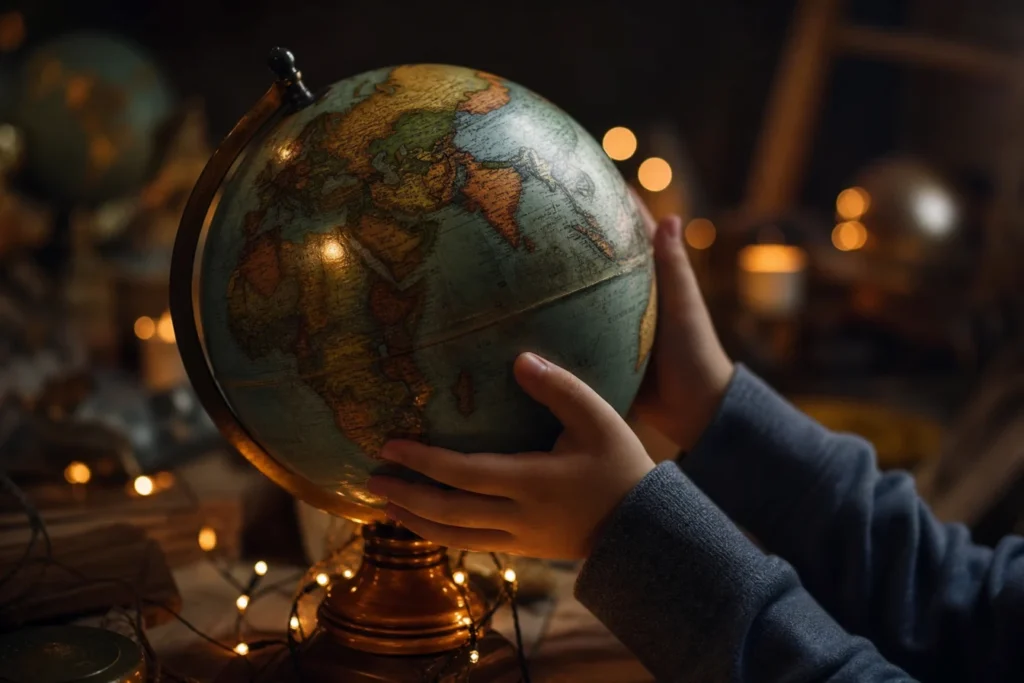
Explore twenty Christmas customs as starting points for learning, not rules for entire countries. Practices vary between communities, religions and households. This guide focuses on celebrations and their context; the separate countdown-customs guide compares how people mark the approach.
Content reviewed September 10, 2026. Countdown values are calculated separately from this editorial date.
Use country traditions as invitations to learn
Christmas customs cross borders, religions and languages. A practice described as “from” one country may belong mainly to a region, denomination or family. Some examples are modern, some old and many have changed through migration and commerce. The responsible way to explore them is to name the context and avoid claiming that millions of people celebrate identically.
The twenty examples below are starting points. If you plan to teach, host or publish about one, consult museums, cultural institutions, religious communities and people who practice it.
1. Germany: Advent wreaths and markets
German Advent traditions include wreaths with four candles, calendars and seasonal markets. The wreath counts the Sundays of Advent. Markets differ by city and are living commercial and community events, not historical theme parks frozen in one era.
2. Austria: Saint Nicholas and Krampus traditions
Saint Nicholas observances around December 6 may appear alongside Krampus figures in parts of Austria and the Alpine region. Public parades can be intense and are not automatically suitable for small children. Treat the tradition as regional folklore with religious connections, not a generic horror costume.
3. Sweden: Saint Lucia Day
December 13 processions feature songs, white garments and lights, with saffron buns associated with the day. Modern events often use electric candles for safety. The observance brings light into the dark Nordic winter and has both family and public forms.
4. Iceland: the Yule Lads
Thirteen folkloric Yule Lads arrive one by one in the nights before Christmas. Children may leave shoes by a window for small gifts. The figures have individual names and mischievous traits, and their stories have softened over time.
5. Finland: Christmas peace
The Declaration of Christmas Peace in Turku is a long-standing public ceremony on Christmas Eve. Many people watch the broadcast. A civic proclamation and a quiet family observance can share the same day without being the same practice.
6. Denmark: calendar candles
A candle marked from 1 to 24 is burned a little each December day. It turns the countdown into a shared evening action. Use a stable holder and never leave a flame unattended.
7. Netherlands: Sinterklaas evening
Sinterklaas celebrations build toward December 5, often with poems and gifts. This changes the gift calendar before Christmas arrives. Public discussion also surrounds elements of the tradition, and visitors should understand current Dutch context rather than repeating outdated imagery carelessly.
8. United Kingdom: crackers and pantomime
Christmas crackers are pulled at meals and usually contain a paper hat, joke and small item. Seasonal pantomime is a theatrical tradition with audience participation, comedy and familiar stories. Neither practice belongs to every household, but both shape the public season.
9. Ireland: candles and homecoming
Candles in windows are often discussed in Irish Christmas tradition, though meanings and present-day practice vary. Christmas is also strongly associated with return visits and family gatherings. Avoid assigning one fixed ancient explanation to every modern candle.
10. France: regional foods and Nativity figures
French Christmas food differs by region. In Provence, the “thirteen desserts” are associated with the Christmas period, and santons are small figures used in Nativity scenes. A national label should not erase the specifically Provençal setting.
11. Spain: Three Kings celebrations
January 5 parades and January 6 gift traditions connected to the Three Kings extend the season beyond December 25. Practices vary across Spain, and Christmas Eve and Christmas Day remain important as well.
12. Italy: presepi and La Befana
Nativity scenes can be elaborate public art or intimate household displays. Epiphany traditions include La Befana in popular culture. Italy’s regions have distinct foods and customs, so a single menu cannot represent the country.
13. Poland: Wigilia
Christmas Eve supper, known as Wigilia, may begin with the first star and include shared wafers, meatless dishes and a place at the table connected with hospitality or remembrance. Details differ by family and religious practice.
14. Ukraine: calendar and regional differences
Ukrainian Christmas dates and customs reflect church calendars, family histories and recent calendar changes. Foods, caroling and decorative symbols may vary. Current cultural and religious sources are essential because a simple January-versus-December claim can be outdated or incomplete.
15. Mexico: Las Posadas
From December 16 to 24, posadas may reenact the search for lodging through processions, songs, prayer and gatherings. The observance has religious meaning. A party inspired by its surface details should not be presented as equivalent to community practice.
16. Puerto Rico: a long musical season
Parrandas involve groups bringing music to homes, often growing as people join. Food and hospitality are part of the social rhythm. The broader season can extend through Three Kings Day and beyond in some communities.
17. Philippines: Simbang Gabi
Nine Masses lead toward Christmas, traditionally held early in the morning, though local schedules vary. Seasonal foods and lanterns are also prominent. The religious sequence is more than a decorative countdown.
18. Japan: modern commercial customs
Christmas is not a national religious holiday for most people in Japan, but seasonal lights, cakes and a well-known fried-chicken marketing tradition have become culturally visible. This is a clear example of modern commerce shaping a holiday practice rather than preserving an ancient custom.
19. Australia: summer Christmas
Christmas arrives in summer. Outdoor meals, seafood, travel and beach imagery can sit beside inherited European symbols. Weather changes food safety, fire risk and the practical schedule. A “white Christmas” is not the natural local frame.
20. Ethiopia: Genna
Ethiopian Orthodox Christmas, often called Genna or Ganna in English-language accounts, is observed in January according to the church calendar. Worship, fasting traditions and local practices should be described from Ethiopian Orthodox sources rather than squeezed into a Western December timeline.
How to explore a tradition without turning it into a prop
- Use the tradition’s own name and spell it carefully.
- Identify whether it is religious, regional, national, commercial or family-based.
- Read a source created by the community or a responsible cultural institution.
- Do not claim an origin story unless evidence supports it.
- Adapt the structure openly instead of pretending to reproduce the practice exactly.
Food requires the same care. A recipe labeled “authentic” may represent one region or one writer. Credit the source, explain substitutions and respect dietary rules.
Plan a family learning night
Choose one country, locate it on a map and learn how to pronounce the tradition’s name. Read a children’s book or museum article, listen to music from a legitimate source and cook one dish using a credited recipe. End by comparing the custom with something your own family repeats.
Do not attempt twenty countries in one evening. Depth is more respectful and more memorable than a buffet of disconnected symbols.
Questions about Christmas around the world
Does every country celebrate Christmas on December 25?
No. Religious calendars, national holidays and local practice differ. Some Christian communities observe Christmas in January, while some countries treat December 25 mainly as a commercial or minority celebration.
Can my family adopt another country’s tradition?
You can learn from and participate respectfully, especially when invited. Name the source, preserve the meaning and avoid costumes or claims that stereotype a community.
Where can we compare countdown customs?
See twelve countdown traditions, the season start guide and the Christmas date hub.