
Christmas countdown customs mark different moments: an Advent Sunday, Christmas Eve, Christmas morning or a later celebration. This guide compares twelve countdown practices without assuming that everyone in a country follows the same tradition.
Content reviewed September 10, 2026. Countdown values are calculated separately from this editorial date.
How to compare Christmas countdown traditions fairly

A countdown is more than a way to number December. It reveals which day a community treats as the emotional center of the season. Some traditions build toward December 24, some toward Christmas morning, some continue through January 6 and others fit the holiday into a wider winter calendar.
National labels are useful shorthand, but they can hide regional, religious and family differences. Not every child in Germany receives the same calendar, not every Mexican household attends a posada and not every British family opens an Advent calendar. The examples below describe well-known practices, not rules for every person in a country.
Germany: printed calendars and the Advent wreath
Germany is closely associated with the development of the modern printed Advent calendar. Nineteenth-century Protestant families used marks, devotional images and other daily practices before commercial calendars became popular in the early twentieth century. Today’s versions range from paper doors with pictures to reusable wooden displays and calendars filled with chocolate, toys or tea.
The Advent wreath counts by Sundays rather than days. Four candles represent the four Sundays before Christmas. In 2026, those Sundays are November 29, December 6, December 13 and December 20. The weekly rhythm keeps Advent distinct from a simple retail countdown.
Denmark: calendar candles and televised stories
A Danish calendar candle is marked with the numbers 1 through 24 and burned a little each day in December. The appeal is physical and visible: the shrinking candle measures time without a door or gift. Fire safety matters, so the candle should remain on a stable heat-resistant surface and never burn unattended.
Denmark also has a strong tradition of televised Christmas calendars, with a story episode for each day leading to Christmas Eve. Similar formats appear elsewhere in Scandinavia. The household does not merely open something. It returns to the same story night after night.
Iceland: thirteen Yule Lads
Icelandic folklore counts the arrival of thirteen Yule Lads in the nights before Christmas. Children may place a shoe in the window and receive a small gift if they have behaved well, or a potato in the cautionary version of the tradition. Each figure has a distinct name and mischievous character.
This countdown begins thirteen nights before Christmas rather than on December 1. It demonstrates how folklore can create a sequence of characters, not just a row of identical days.
Mexico: Las Posadas
Las Posadas is commonly observed over nine nights from December 16 through December 24. Processions and gatherings recall Mary and Joseph seeking lodging. Practices vary, but songs, prayer, food, piñatas and visits between homes or community spaces may be involved.
The nine-night structure gives the final part of Advent a social rhythm. It is not simply entertainment for children, and visitors should avoid treating a religious community observance as a costume theme detached from its meaning.
Philippines: Simbang Gabi
Simbang Gabi is a series of nine Masses leading toward Christmas, traditionally held early in the morning, though schedules vary. The sequence usually begins on December 16. Churches and communities may pair worship with seasonal foods and gatherings.
For participants, the countdown is built around repeated attendance and preparation. It shows why a digital timer cannot fully explain how some communities experience the approach to Christmas.
United Kingdom: Advent doors and paper chains
Commercial Advent calendars are common in the United Kingdom, but family countdowns also include paper chains, chalkboards and acts of kindness. Christmas television schedules, school performances and the final posting dates create additional practical milestones.
Many families center anticipation on Christmas morning, while church calendars continue through the Twelve Days of Christmas. The difference between the popular countdown and the liturgical season is important. Advent ends as Christmas begins.
Italy: presepi and the road to Epiphany
Italian Nativity scenes, or presepi, may be assembled through Advent, with the figure of the infant Jesus added at Christmas. In some families the season continues strongly to Epiphany on January 6, associated with La Befana in popular tradition.
This longer arc changes the meaning of December 25. Christmas Day is a central event, but not necessarily the point when every decoration or custom stops.
Sweden: Saint Lucia Day
Saint Lucia Day on December 13 is a major marker in the Swedish December calendar. Processions feature white garments, candles and songs, with safety adaptations often used for children. Saffron buns are closely associated with the day.
Because December 13 sits near the middle of the month, it functions as a bright checkpoint during a dark season. A good countdown needs such landmarks. Twenty-four identical boxes can make the month feel flatter than it is.
Netherlands: Sinterklaas changes the December rhythm
In the Netherlands, Sinterklaas celebrations build toward the evening of December 5. Gift giving connected to that tradition may occur before the Christmas countdown reaches its final weeks. Christmas remains important, but the gift calendar is not organized in exactly the same way as in households where December 25 carries the main exchange.
This is a useful reminder for international families and marketers: “holiday shopping deadline” does not mean one date everywhere.
Poland: waiting for the first star
Polish Christmas Eve customs vary, but the appearance of the first star may signal the beginning of the Wigilia meal. The countdown therefore reaches a visible moment in the sky, not a clock striking midnight. Weather and city light can make the star symbolic, but the idea connects the household meal to the Nativity story.
Spain: from Christmas to Three Kings Day
For many Spanish families, January 6 and the arrival of the Three Kings remain an important gift-giving point. Parades on January 5 form part of the anticipation. Christmas celebrations therefore extend beyond New Year’s Day, and a calendar ending abruptly on December 25 tells only part of the story.
United States and Canada: personalized family systems
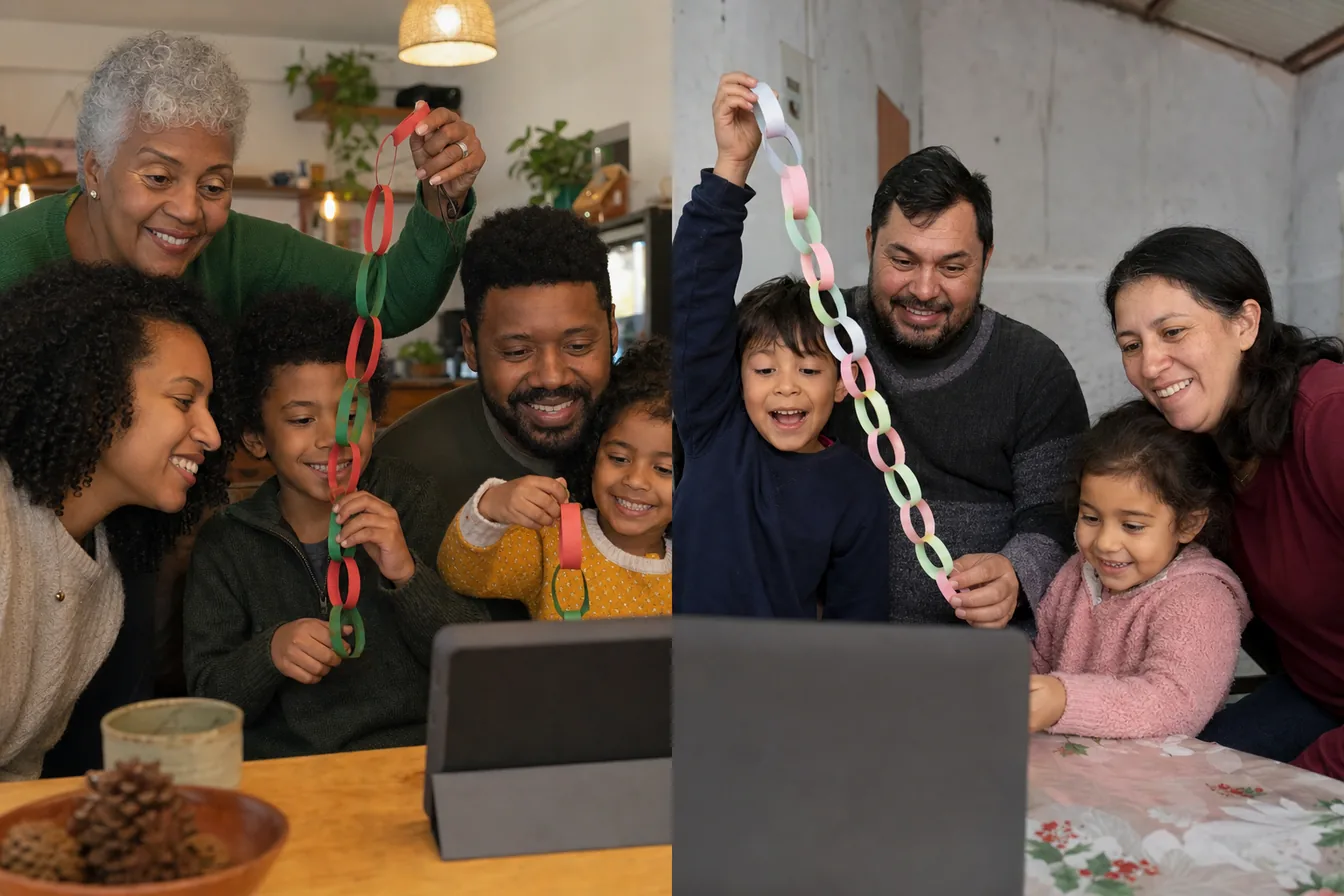
North American households use commercial Advent calendars, paper chains, chalkboards, book-a-night baskets and “sleeps until Christmas” signs. Religious and secular approaches overlap. Families with shared custody or travel plans may count down to their own celebration date rather than December 25.
The most useful modern trend is the activity calendar, but it needs restraint. Twenty-four mandatory crafts can make December harder. Mix ordinary pleasures with a few plans: read a book, call a relative, look at lights, donate food or make cocoa. Leave busy days blank.
How to borrow a tradition respectfully
Start with the tradition’s own name, community and meaning. Use reliable museums, churches, cultural organizations or scholarship rather than a listicle that strips away context. Do not present a sacred observance as a quirky party game. If the practice belongs to your heritage, ask relatives how they remember it. Family accounts often explain details that a generic craft tutorial misses.
You can also take inspiration from the structure without claiming the identity. A household might use a candle marked with December dates because it likes the daily ritual, while clearly describing it as inspired by Scandinavian calendar candles.
Design your own countdown
- Choose the ending date. It may be December 24, December 25, a family gathering or January 6.
- Choose the unit: days, Sundays, nights or story episodes.
- Add three meaningful milestones so the sequence has shape.
- Decide whether the action is opening, lighting, reading, moving or giving.
- Keep the daily burden under five minutes unless the activity is optional.
For a hands-on version, see the homemade Advent calendar guide. For the church dates, use the 2026 Advent calendar. The Twelve Days guide explains why some countdown traditions lead into a season that continues after December 25.