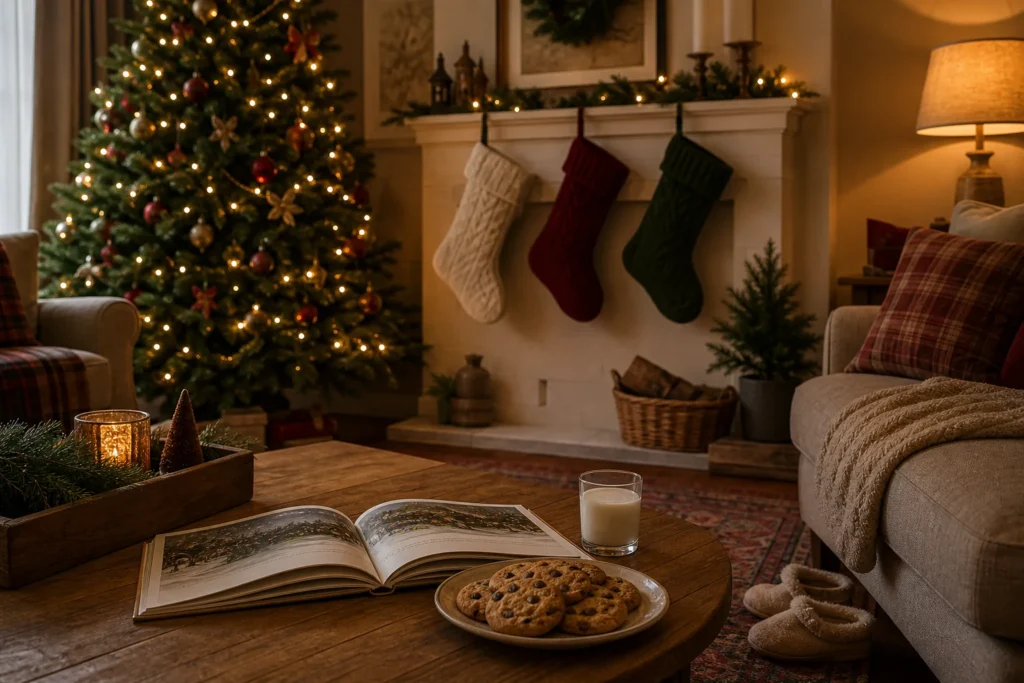
Choose one or two Christmas Eve traditions that fit your household’s time, beliefs, access needs and budget. These twelve ideas are a menu, not a checklist. Christmas Eve 2026 is Thursday, December 24; work and school arrangements need a separate check.
Content reviewed September 10, 2026. Countdown values are calculated separately from this editorial date.
Start with the shape of Christmas Eve 2026
Christmas Eve falls on Thursday, December 24, 2026. For many Monday-to-Friday workers, it is the final workday before a Friday Christmas. Schools, shops, transport operators and places of worship may use shortened schedules, but those hours must be checked locally. A tradition that begins at 3 p.m. will not suit a parent working until 5 or a relative arriving on the last train.
Choose traditions by answering three questions: Who will be present? How much energy will they have? What time-sensitive tasks still need to happen? The best annual ritual is repeatable on an ordinary year, not just possible when every condition is perfect.
1. Make one meal that belongs to Christmas Eve
A signature meal gives the evening a clear beginning. It can be formal, but it does not need to be. Soup and bread, a tray of baked pasta, takeout from the same local restaurant or breakfast for dinner can become meaningful through repetition.
Choose food that can wait if travel runs late. A roast that must be served at 6:15 creates stress. A pot of soup, a grazing table or a dish assembled earlier is more forgiving. Write down allergies and preferences in the recipe notes so next year’s version does not restart the same conversation.
2. Take a neighborhood light walk
Pick a short route that works for the youngest and oldest person. Bring reflective clothing, warm layers and a flashlight where needed. A twenty-minute walk is enough. The purpose is to notice the neighborhood, not to rank displays or drive across the city chasing a viral map.
If weather is unsafe, move the ritual to a window: turn off indoor lights, make a warm drink and watch the street for ten quiet minutes. A tradition survives when it has a simple bad-weather version.
3. Read one story aloud
Choose a text that fits the household. It might be the Nativity account, a picture book, a family memoir or a short story. Keep a copy with the decorations and write the year inside the cover. Children can take turns choosing as they grow.
Do not force a long reading after an exhausting day. A poem or two-page picture book can carry as much memory as a chapter. Put phones away for the length of the reading.
4. Record a five-minute family interview
Ask one person three questions: What do you remember about Christmas at age ten? Which food was always present? Who do you wish could see this evening? Record audio with permission and name the file with the person and year.
This creates a family archive without staging a formal documentary. Back up the files in two places and do not publish private stories without consent. Older relatives may value receiving the recording afterward.
5. Exchange one small Christmas Eve item
Pajamas, a book, an ornament or a game can mark the evening, but set a clear boundary. The practice loses its charm when it becomes a second full gift exchange. Choose a category, price limit and storage rule.
A reusable option is to wrap the same family game, movie disc or book collection each year. Children still get the pleasure of opening something, and the household does not accumulate duplicate objects.
6. Prepare a plate for the morning
Set the breakfast table, measure dry ingredients or assemble a make-ahead dish. This is both practical and ceremonial. The household ends Christmas Eve by caring for its future self.
Keep perishable food refrigerated and follow safe storage guidance. Do not leave dairy, eggs or cut fruit at room temperature overnight for the sake of a pretty table.
7. Write a short gratitude note
Each person writes one thing they appreciated during the year and one hope for the household. Put the notes in an envelope and open them the next Christmas Eve. Younger children can draw. People may keep their note private if they prefer.
Avoid turning the activity into a performance of forced positivity. Difficult years are real. “We got through it together” is a valid reflection.
8. Call one person who may be alone
Arrange the call in advance rather than surprising someone at dinner. Keep it short if either household is busy. A reliable ten-minute call every year can matter more than a group video chat where nobody can hear.
For relatives in another time zone, use the world countdown guide to choose a considerate hour.
9. Give children one real preparation job
Children can place napkins, fill a basket with safe items, choose the breakfast music or put name cards on the table. The job should contribute to the household, not imitate work while an adult secretly does it again.
Match the task to age and supervise kitchens, candles, ladders and sharp tools. Photograph the finished contribution, not every step.
10. Mark the evening with music
Create a playlist short enough to finish. Ten songs encourage listening, while six hours of background music becomes noise. Let each person contribute one selection and explain why it belongs.
Musicians can play a single carol together. Perfection is unnecessary. Repeating the same piece each year makes changing skill levels part of the memory.
11. Prepare for a service without rushing
If worship is central to Christmas Eve, confirm the service time, parking, accessibility, childcare and whether tickets are required. Set clothes and any contribution aside earlier in the day. Arrive according to the church’s guidance, especially for a popular candlelight service.
Battery candles may be the safer option for children and some venues. Follow the host’s rules rather than bringing your own flame.
12. Create a closing ritual
Many Christmas Eve plans have an opening but no ending. Choose one small signal: turn off the tree lights together, read tomorrow’s schedule, place stockings, say a prayer or take one final photograph. The closing helps children and adults shift toward sleep.
How to choose two traditions instead of twelve
List the ideas and score each from one to five for meaning, effort and repeatability. Keep one active tradition, such as a walk or meal, and one quiet tradition, such as a story or note. Try them for three years before adding more.
Do not copy a tradition just because it photographs well. Ask whether the people present enjoy it when no camera is on. If not, let it go.
A Thursday timetable that leaves breathing room
- Morning: Complete only essential food preparation and collections.
- Early afternoon: Check travel and opening hours, then stop ordinary shopping.
- Late afternoon: Welcome arrivals and serve a flexible meal.
- Early evening: Choose the active tradition, such as a walk or service.
- Later evening: Use the quiet tradition and prepare breakfast.
- Before bed: Close the evening and keep one hour unscheduled.
Christmas Eve questions
What if family members work that day?
Place the main ritual after the latest realistic arrival or move it to another date. A tradition should include people, not punish them for their work schedule.
How much should a new tradition cost?
Nothing, if possible. Repetition creates meaning more reliably than spending. Use food, books and objects the household already owns.
Where does this fit with the rest of the season?
Use the Friday Christmas calendar, the final 29-day plan and the live countdown to protect the evening from last-minute tasks.